Choosing the right dog walking service is an important decision for any dog owner. While some dogs love exploring with other dogs, others feel more comfortable enjoying a quieter walk on their own. So, when comparing group dog walking vs solo dog walking, which option is best for your pet?
The answer depends on your dog’s personality, age, energy levels and individual needs. Understanding the differences between the two can help you choose a dog walking service that keeps your dog happy, active and comfortable.
What Is Group Dog Walking?
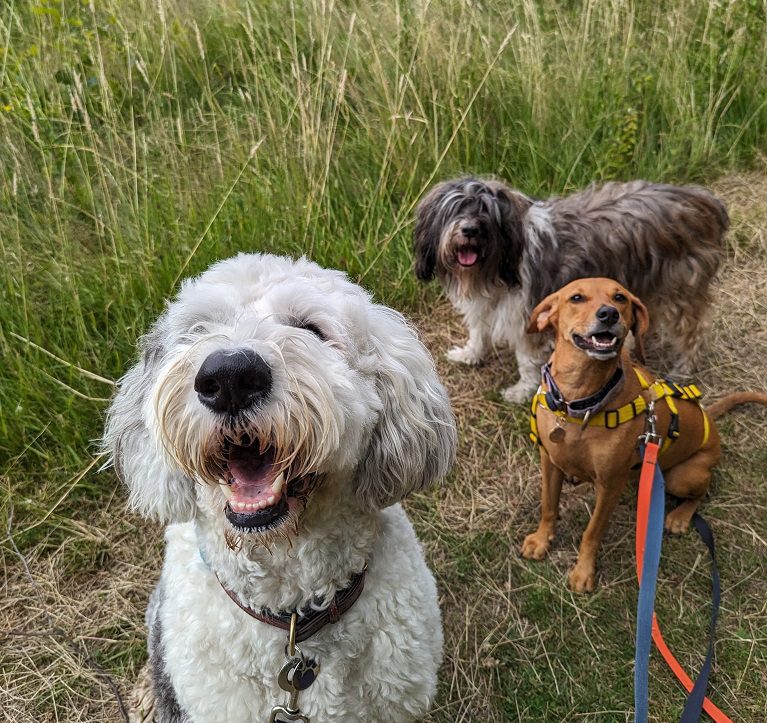
Group dog walking involves walking several dogs together under the supervision of a professional dog walker. Dogs can enjoy exercise, explore new environments and, where appropriate, interact and socialise with other dogs.
For sociable dogs that enjoy canine company, group walks can be an excellent way to provide both physical exercise and mental stimulation.
Benefits of Group Dog Walking
Socialisation opportunities
Group walks can give suitable dogs opportunities to interact with other dogs in a supervised environment. Positive experiences can help dogs become more comfortable around their canine companions, although socialisation should always be appropriate to the individual dog.
Mental stimulation
Walking alongside other dogs exposes your pet to different smells, sounds and experiences. Exploring new environments and following interesting scents can provide valuable mental enrichment.
Regular exercise
Group walks offer an opportunity for dogs to stretch their legs, explore and burn off energy during the day. The length and intensity of each walk should be suitable for the dogs taking part.
A more engaging walk
Some dogs enjoy the company of familiar canine companions and appear more confident when walking alongside them. For these dogs, group walks can become an enjoyable part of their daily routine.
What Is Solo Dog Walking?
Solo dog walking involves a professional dog walker taking one dog out at a time, without other dogs joining the walk. This allows the experience to be tailored more closely to the dog’s individual requirements.
It can be particularly suitable for dogs that prefer their own space, need a quieter environment or benefit from a more individual approach to exercise.
Benefits of Solo Dog Walking
Individual attention
With no other dogs to manage, the walk can focus entirely on your dog’s pace, interests and comfort.
A quieter environment
Dogs that feel anxious around unfamiliar dogs or become overwhelmed in busy environments may find individual walks more comfortable.
A personalised routine
Solo walks can be adapted to your dog’s energy levels, walking preferences and physical capabilities. This can be particularly helpful for older dogs or those with specific exercise requirements.
Fewer social demands
Not every dog enjoys interacting with other dogs, and that’s perfectly normal. Solo walks allow dogs to enjoy exercise and explore without the expectation of socialising with canine companions.
Group Dog Walking vs Solo Dog Walking: The Main Differences
The best option depends on what your dog needs from a walk.
Group dog walking may be a good fit if your dog:
- Enjoys being around other dogs.
- Is comfortable walking in a group.
- Benefits from varied environments and appropriate social interaction.
- Can walk safely alongside other dogs.
Solo dog walking may be a better fit if your dog:
- Feels nervous or uncomfortable around other dogs.
- Becomes easily overstimulated in busy environments.
- Needs a more individual pace or walking routine.
- Has particular physical needs that require tailored exercise.
Neither option is automatically better. A well-managed group walk can be wonderful for a suitable dog, while a solo walk can provide the calm, individual attention another dog needs.
Is Group Dog Walking Good for Every Dog?
No. Dogs have different temperaments, and not every dog will enjoy walking with a group.
A dog’s suitability for group walks should be assessed individually, taking into account their behaviour around other dogs, recall, lead manners, confidence and ability to settle in a shared environment.
Puppies, older dogs and dogs with anxiety or particular behavioural needs may require additional consideration. Some dogs may benefit from individual walks, while others can gradually become comfortable with carefully managed groups.
A responsible dog walker should prioritise safety and welfare, consider compatibility between dogs, and avoid placing dogs in situations that cause unnecessary stress.
How to Choose the Right Dog Walking Service
Before booking a dog walker, consider the following questions:
1. Does your dog enjoy canine company?
Observe how your dog behaves around other dogs. Relaxed, appropriate interactions may indicate that group walks are worth considering, whereas persistent fear or discomfort may suggest a different approach.
2. How much exercise does your dog need?
Age, breed, fitness and health all influence the amount and type of exercise your dog needs. A suitable walking routine should reflect these individual requirements.
3. How are dogs supervised?
Ask how dogs are matched, how many dogs are walked together, and what safety procedures are in place. The aim should always be a positive and manageable experience for every dog.
4. Can the service accommodate your dog’s needs?
A good dog walking service should take your dog’s temperament and requirements seriously rather than assuming that one type of walk suits every pet.
5. How will you receive updates?
Regular updates can give you peace of mind while your dog is out. Ask whether the dog walker provides photos, messages or GPS tracking during walks.
Final Thoughts
When comparing group dog walking vs solo dog walking, the right choice is the one that best supports your dog’s wellbeing. Sociable dogs may enjoy the company and stimulation of a group, while dogs that prefer a quieter environment may benefit from individual walks.
Take the time to consider your dog’s temperament, exercise needs and comfort around other dogs before deciding. With the right walking routine and a responsible professional dog walker, your dog can enjoy a positive and rewarding experience.
Looking for a dog walker in North London?
If you’re returning to work and need some extra help keeping your dog’s routine consistent, Dog Shepherds provides professional dog walking and daycare across North London, including Hampstead, Finchley, Golders Green, Queen’s Park, Primrose Hill and surrounding areas.
Whether your dog needs a regular midday walk or more structured care during the working week, we’d be happy to help you find an arrangement that works for both you and your dog.
Get in touch with Dog Shepherds to find out more about our dog walking services.
Happy dog walking!